

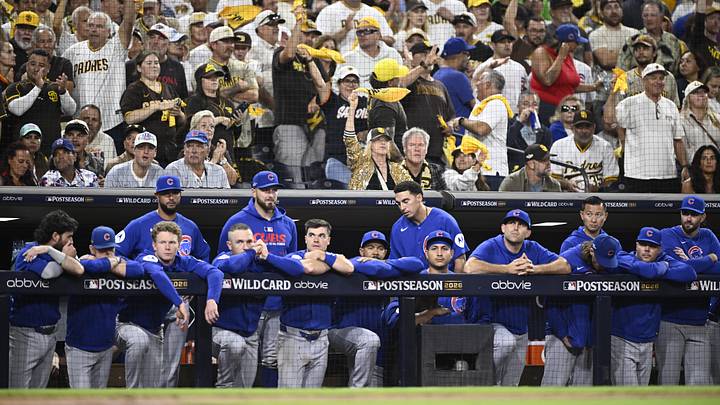
That's what the Chicago Cubs hit as a team during their embarrassingly short stay in the postseason.
Eight hits in 62 at-bats. One run. One extra-base hit. Eighteen innings.
The Cubs picked a terrible time to forget how to hit
This wasn't some offensively challenged team that limped into October and finally got exposed.
The Cubs led Major League Baseball in runs during the regular season. They also led baseball in walks, slugging percentage and OPS while leading the National League in home runs.
Then the playoffs started.
Chicago was shut out 8-0 in Game 1 and followed that masterpiece with a 4-1 loss in Game 2. The Padres held the Cubs to eight hits across the entire series, seven of which were singles.
Nico Hoerner's ninth-inning double in Game 2 was Chicago's first and only extra-base hit.
That's almost impressive in the worst possible way.
For all the damage this lineup inflicted during the regular season, the Cubs couldn't produce one meaningful offensive inning when their season depended on it.
Chicago's biggest stars disappeared with everyone else
Pete Crow-Armstrong and Alex Bregman were supposed to be the guys capable of changing a postseason series.
Instead, they became two of the clearest examples of what went wrong.
The pair combined to go 0-for-15 with eight strikeouts against San Diego. Crow-Armstrong acknowledged afterward that he hadn't contributed, while Bregman was even less interested in sugarcoating what happened.
"I look at it as a failure," Bregman said after the elimination.
Hard to argue with him.
This wasn't all on two players, either. A lineup doesn't hit .129 because two guys struggled. The Padres shut down virtually everybody Chicago sent to the plate.
San Diego led after 17 of the series' 18 innings. Chicago never held a lead.
That isn't losing a competitive playoff series.
That's getting handled.
A great regular season doesn't make this ending any better
There will be plenty of time to appreciate what Chicago accomplished during the regular season.
The Cubs had baseball's highest-scoring offense. Their defense was outstanding. Crow-Armstrong put together an MVP-caliber season. This looked like a roster capable of hanging around deep into October.
Instead, October essentially arrived without them.
Chicago's offensive problems actually began before the trip to San Diego. The Cubs scored only 16 runs over their final eight games, carrying a late-season offensive funk directly into the postseason.
Then it somehow got worse.
A .129 batting average over two games doesn't erase 162 games of good baseball. Short playoff series can produce bizarre results, and San Diego entered October playing exceptionally well.
But nobody in Chicago is going to remember this season by admiring the regular-season OPS leaderboard.
They're going to remember eight hits.
They're going to remember one run.
And they're going to remember .129.
The best offense in baseball waited until the postseason to become one of the easiest lineups in baseball to put away.
| More Cubs on DaWindyCity |
 Add us as a preferred source on Google