

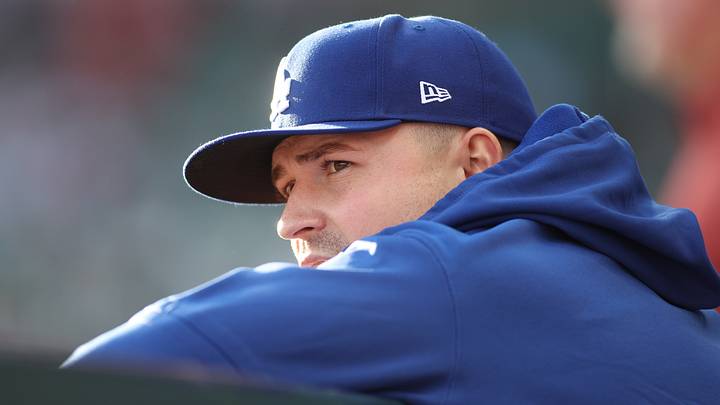
The Chicago Cubs haven't even entered a bidding war for Tarik Skubal, and there's already reason to wonder whether they'll stick around long enough to make a serious offer.
According to ESPN's Jeff Passan, Chicago badly wants the two-time Cy Young Award winner. Unfortunately, there's a rather significant catch. The Cubs are reportedly skeptical they'll compete financially with teams willing to spend upward of $300 million, potentially exceeding $400 million.
That's quite a way to begin the offseason. Identify the best pitcher available, acknowledge how badly you want him, and immediately question whether you're willing to pay for him.
Cubs' interest in Tarik Skubal comes with a familiar warning
Nobody should expect Jed Hoyer to casually hand out $400 million. Skubal turns 30 this month, and his injury history deserves consideration. He underwent an elbow procedure during the 2026 season, adding another concern to a contract that could stretch well into his late 30s.
There's a reasonable argument against making that commitment. There's also a reasonable argument that the Cubs should be among the franchises capable of considering it.
Chicago isn't some struggling small-market organization operating on a shoestring budget. The Cubs play at Wrigley Field, have a national following, and possess the financial resources to compete with baseball's biggest spenders.
Yet when an elite free agent becomes available, the conversation frequently turns toward what Chicago probably won't spend.
Fans have heard variations of this before.
Last offseason, Kyle Tucker entered free agency after spending 2025 with the Cubs. Chicago ultimately watched him sign with the Los Angeles Dodgers rather than match the financial commitment necessary to retain him.
Now another superstar is available, and the financial hesitation is already part of the discussion.
Chicago's rotation needs more than another offseason compromise
The frustrating part is that Skubal fits an obvious need.
Chicago spent much of 2026 trying to piece together a dependable rotation. Injuries complicated those efforts, and the upcoming departures of several veteran starters could leave Hoyer with even more work.
Cade Horton's injury situation adds another layer of uncertainty. Justin Steele's return also leaves questions about what the Cubs can reasonably expect from him.
Skubal would eliminate one enormous question immediately.
He wouldn't guarantee a championship, of course. No starting pitcher can accomplish that alone. But there's a difference between adding someone capable of filling a rotation spot and acquiring someone opponents genuinely fear facing in October.
The Cubs have enough uncertainty without voluntarily passing on the opportunity to secure an established ace.
Still, spending $400 million on one pitcher could prevent Chicago from addressing multiple weaknesses. Hoyer has to weigh that possibility against the benefit of adding one of baseball's best players.
That's a legitimate baseball decision, not simply an excuse to criticize ownership.
What becomes harder to defend is expressing such strong interest while seemingly preparing for the possibility that the financial competition will be too much.
The Cubs don't have to sign Skubal to have a successful offseason. They could strengthen their rotation through several smaller acquisitions and build a more complete roster.
But those alternatives need to produce results.
If Chicago misses out on Skubal and spends another season searching for dependable starting pitching, fans won't be particularly interested in hearing how expensive he was.
They'll remember that the Cubs reportedly wanted him badly.
And they'll wonder whether they ever gave themselves a realistic chance.
| More Cubs on DaWindyCity |
 Add us as a preferred source on Google