

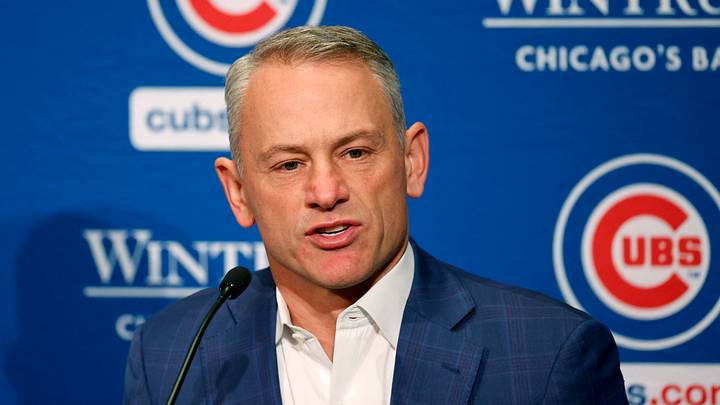
The Chicago Cubs have a chance to do something this winter that Jed Hoyer hasn't always had the flexibility to do: change a substantial portion of the roster without necessarily increasing payroll.
Nearly $93 million in 2026 salaries is tied to a group of players who could be leaving Chicago. That includes Seiya Suzuki, Ian Happ and several pitchers. Not all of that money would become available for new contracts, but it's enough to make the Cubs' offseason considerably more interesting.
And if Hoyer brings back essentially the same group, he'd better have a convincing explanation.
Cubs have some expensive decisions coming
Suzuki might be the toughest call.
The Cubs signed him to a five-year, $85 million contract before the 2022 season, and he's been one of their more dependable offensive players. Letting him walk would create a hole in the lineup. Keeping him, however, could mean committing another sizable contract to a player entering his 30s.
Neither option is particularly appealing.
Happ is another veteran whose future deserves a closer look. He's been with Chicago since 2017, which practically makes him part of the furniture at Wrigley Field. He's provided solid defense, occasional power and a familiar presence in the lineup.
But familiarity only gets a team so far.
The Cubs have to decide whether they're paying for what these players can contribute over the next several seasons or rewarding them for what they've already accomplished.
Then there's the rotation.
Shota Imanaga, Kevin Gausman and David Peterson are among the pitchers whose contract situations could force Chicago to make changes. Losing multiple established starters would create an entirely different set of problems, especially for a club that already needs pitching help.
Hoyer doesn't necessarily have to replace every departing player with another expensive veteran. He does, however, need to avoid creating three new weaknesses while trying to fix one.
Chicago's pitching problems aren't going away on their own
The Cubs surrendered 231 home runs during the 2026 regular season. That was the highest total in the National League.
You can talk about injuries, difficult matchups and bad luck all you want. Giving up that many home runs isn't a recipe for winning in October.
The bullpen wasn't much easier to figure out.
Chicago had 14 different pitchers record a save, a franchise record. There's something almost impressive about that level of turnover, although probably not in the way Hoyer would prefer.
The Cubs spent too much of the season trying to figure out who could reliably finish games.
That's why pitching should dominate the offseason conversation.
Chicago doesn't necessarily need to throw an enormous contract at the biggest available starter. Adding two dependable rotation options and rebuilding the back end of the bullpen could accomplish more than spending most of its resources on one recognizable name.
Of course, quality pitching isn't cheap. Every team wants it, and the price tends to climb once free agency begins.
But that's the problem Hoyer gets paid to solve.
The Cubs might have to say goodbye to a familiar face
Nobody enjoys watching productive players leave, particularly when they've spent years becoming part of the organization.
Still, Chicago can't keep every veteran simply because fans recognize the name on the back of the jersey.
Suzuki and Happ have both contributed plenty. That doesn't automatically make extending both contracts the right decision.
The Cubs have younger players who deserve opportunities, and the trade market could offer alternatives that cost less than another long-term free-agent commitment.
There's also the possibility that Hoyer moves an established player before his contract expires rather than waiting until free agency.
That wouldn't necessarily signal a rebuild. It could simply mean Chicago has decided to spend its money in different places.
The Cubs already have enough talent to compete. What they haven't shown is that their current roster construction can consistently carry them through a postseason run.
Changing that might require a few unpopular decisions.
Early prediction: Hoyer makes pitching the priority
Here's where I think this goes.
The Cubs retain some of their established veterans, but at least one recognizable outfielder ends up playing elsewhere in 2027. Chicago uses a significant portion of its available resources to address the rotation and bullpen rather than trying to win the offseason with one enormous contract.
I also wouldn't rule out a trade involving a player most fans assume will return.
Hoyer has enough potential payroll flexibility to explore several approaches, and there's little reason to believe every move will come through free agency.
The real challenge is getting better without creating another expensive roster that still has obvious holes.
Nearly $93 million in potential departing salaries doesn't guarantee Chicago can sign whoever it wants. Some of that money will disappear into arbitration raises and other obligations before the Cubs even start shopping.
But it does create options.
And after watching the pitching staff struggle throughout 2026, Hoyer would have a difficult time explaining why he chose not to use them.
| More Cubs on DaWindyCity |
 Add us as a preferred source on Google