

Nobody can accuse the Chicago Cubs of being unwilling to spend money this offseason.
Between Trevor Rogers and Teruaki Sato, the Cubs have committed $240 million to two players who should immediately improve the roster. It's the kind of financial commitment fans have been waiting to see from the organization.
But there's a significant difference between spending money and completing a roster.
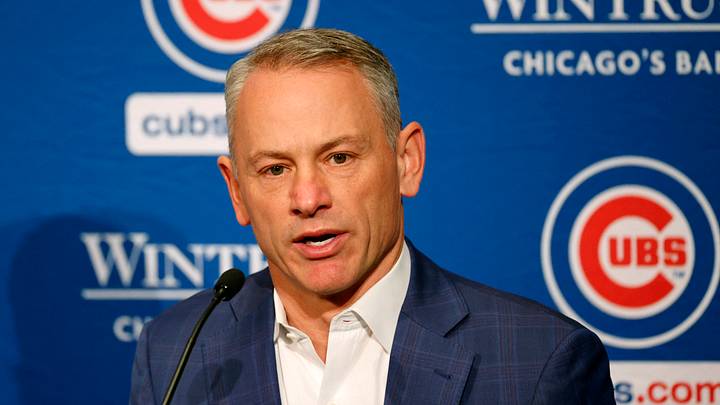
For all the excitement surrounding Chicago's offseason, Jed Hoyer still has work to do with the starting rotation.
Trevor Rogers can't fix the Cubs' rotation alone
Signing Rogers to a five-year, $120 million deal was a necessary move. However, the Cubs are also losing innings elsewhere in their rotation.
David Peterson has already signed with the Colorado Rockies, while Shota Imanaga and Matthew Boyd remain free agents. There's also considerable uncertainty surrounding Justin Steele's return from injury.
That's a lot of question marks for an organization with World Series aspirations.
The Cubs led baseball with 850 runs scored last season but failed to advance beyond the National League Wild Card Series. Adding Sato's power to a lineup featuring Pete Crow-Armstrong should help offset potential departures, but scoring runs wasn't necessarily Chicago's biggest problem.
The Cubs need a rotation capable of getting them through October, not just the 162 games leading up to it.
Rogers is a good addition, but his arrival shouldn't mean the Cubs suddenly feel comfortable relying on their current pitching depth.

Jed Hoyer can't afford to take his foot off the gas
The cost of starting pitching isn't doing Chicago any favors.
Dustin May received a three-year, $52.5 million contract from the White Sox despite posting a 4.71 ERA last season. Even Peterson landed $32 million over two years from Colorado.
Suddenly, bringing back Imanaga or Boyd might require a bigger financial commitment than the Cubs originally anticipated.
Michael King, Zac Gallen, and Shane Bieber are among the other available starters, according to the New York Post's Jon Heyman. The problem is that Chicago isn't the only contender looking for pitching, especially with a potential December 1 lockout approaching.
Hoyer has already invested heavily enough to suggest the Cubs are serious about competing for a championship. Why stop short of addressing the very thing that could prevent them from getting there?
Nobody will care how much money the Cubs committed in November if they're entering another postseason with questions surrounding their starting rotation.
Chicago has done some impressive work this offseason. Now comes the part that could determine whether those investments actually pay off.
 Add us as a preferred source on Google