

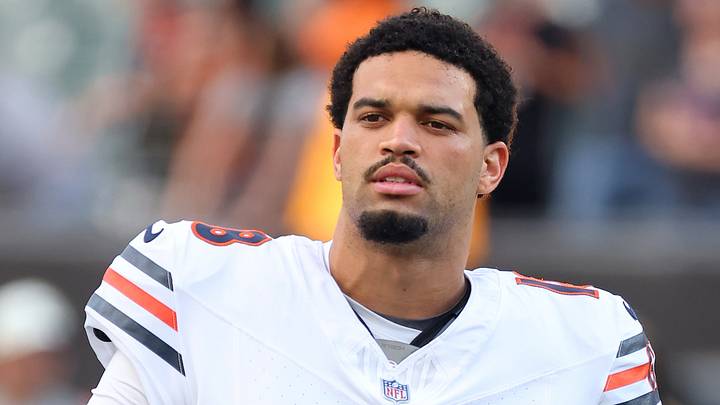
Caleb Williams is no longer surprising the Chicago Bears when he turns a collapsing play into something useful. His teammates have started expecting it.
During an appearance on The Pivot Podcast, Bears tight end Colston Loveland explained how much confidence Chicago has developed in Williams with a game hanging in the balance.
Asked whether the Bears believe their quarterback will find a way to create a play when given one final opportunity, Loveland immediately agreed.
“Yeah. That’s the truth,” Loveland said. “That’s the truth.”
The answer was brief. His explanation revealed why Chicago has become so comfortable putting the outcome in Williams’ hands.
“It’s like running a route knowing at any time this thing can open up,” Loveland said. “He’ll break the pocket. We can get a big scramble play. It’s just crazy.”
Bears expect Caleb Williams to extend every play
Williams has always been at his most dangerous after the original design begins falling apart. His ability to escape pressure forces receivers to continue working while defenders attempt to cover them for several extra seconds.
For Loveland, an early read going elsewhere does not necessarily eliminate him from the play. Williams can break containment, reset the action and uncover an opportunity that did not previously exist.
That freedom occasionally comes with a price. Williams can hold the ball too long while waiting for something bigger to develop, turning a manageable situation into a sack. Chicago must balance his creativity with the need to keep the offense on schedule.
Completely removing that instinct would be foolish, though. Very few quarterbacks can create the opportunities Williams sees once protection breaks down.
A defense can handle its assignment perfectly and still lose because Williams bought another second. By then, Loveland or another receiver may have escaped coverage.
Williams has earned Chicago’s late-game confidence
The Bears are not trusting Williams solely because of what he can do physically. Loveland has watched him remain composed during comeback attempts when Chicago had little room left for another mistake.
“We’re comfortable,” Loveland said. “We’re right where we want to be, so let’s go drive down here and end this game.”
That belief changes how an offense handles pressure. Players do not need to panic after a negative play. Receivers know they must remain alert because Williams can reverse the direction of a drive without warning.
Chicago’s preparation under Ben Johnson has also helped. Loveland said the Bears spend significant time practicing two-minute drives and other end-of-game situations. Williams is being asked to create late-game opportunities, but he is not simply being tossed onto the field and told to perform magic.
The Bears still need their quarterback to become more consistent from one drive to the next. Spectacular escapes are wonderful when they work. Building an entire offense around weekly miracles is how coaches begin aging in dog years.
Loveland’s comments nevertheless show how far Williams has come inside Chicago’s locker room. His teammates no longer view a broken pocket as the end of a play or a late deficit as a reason to surrender.
They expect Williams to find another opening.
Now the quarterback must prove that expectation can carry the Bears somewhere beyond another entertaining comeback.
| More Bears on DaWindyCity |
 Add us as a preferred source on Google