

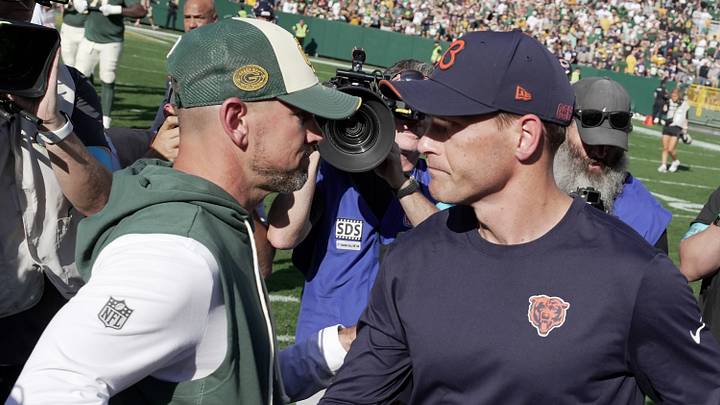
The Chicago Bears had plenty of problems in Sunday's 31-7 loss to the Green Bay Packers. Tyson Bagent was one of them, but head coach Ben Johnson deserves criticism for how long he waited to do something about it.
Starting Bagent wasn't necessarily the wrong decision. Leaving him in the game until Chicago was trailing by 24 points was another matter.
Ben Johnson waited too long to make a change
Bagent's afternoon was difficult to watch. The backup quarterback completed just 12 of 21 passes for 87 yards and threw two interceptions before Johnson finally replaced him with Case Keenum in the fourth quarter.
By then, Green Bay was leading 31-7.
The Bears weren't asking Bagent to be Caleb Williams. They needed him to protect the football, manage the offense and give Chicago a chance to stay competitive.
He couldn't do it.
His first interception helped Green Bay build a 14-0 lead. Chicago eventually responded with a 16-play touchdown drive that cut the deficit to seven before halftime.
That should have been an opportunity for Johnson to reassess his approach.
Instead, the offense continued struggling after halftime, and Bagent remained under center until another interception helped Green Bay extend its lead.
Johnson eventually made the change, but what was Keenum supposed to accomplish at that point?
Case Keenum deserved an earlier opportunity
There's no guarantee Keenum would have changed the outcome. He threw an interception of his own after entering the game, and the Packers were clearly the better team.
But Keenum had already demonstrated he could operate Johnson's offense.
Against Philadelphia in Week 3, the 38-year-old completed 24 of 34 passes for 247 yards and two touchdowns. He also scored on the ground.
Those numbers weren't ancient history. They came just three weeks before Sunday's disaster.
Yet Johnson continued riding with Bagent despite an offense that couldn't consistently move the football.
When Keenum finally entered, he completed consecutive passes to Luther Burden III, moving Chicago inside the Green Bay 5-yard line before the drive ended with an interception.
It wasn't enough, but it showed why an earlier change deserved consideration.
Bears have bigger problems than their backup quarterback
Johnson shouldn't escape criticism simply because Williams was unavailable.
Chicago committed five turnovers, and the defense allowed Jordan Love to throw for 367 yards and two touchdowns. Green Bay also scored on its first two possessions.
That's not a recipe for winning, regardless of who's playing quarterback.
Still, Johnson controls the offensive decisions. He had two experienced options available and waited until the game was effectively decided to try something different.
The Bears are now 3-2, with a trip to Atlanta coming next Sunday.
Williams could return, which would eliminate the immediate quarterback controversy. But Sunday's loss raised a question that won't disappear with his return.
If Johnson recognizes that something isn't working, how long is he willing to wait before changing it?
Starting Bagent was defensible. Waiting until the fourth quarter to bench him was much harder to justify.
| More Bears on DaWindyCity |
 Add us as a preferred source on Google