

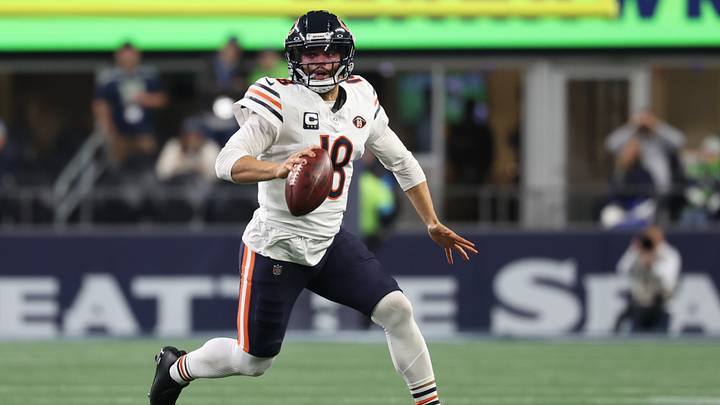
The Chicago Bears deserve every bit of praise coming their way after Monday night's 34-17 victory over the Seattle Seahawks. Bears head coach Ben Johnson's offense controlled the game, Caleb Williams looked comfortable against one of the NFL's toughest defenses, and Chicago walked out of Seattle looking like a legitimate Super Bowl contender.
But former Seahawks cornerback and NFL analyst Richard Sherman raised an interesting point during his postgame reaction. Seattle struggled to pressure Williams, and the reason behind that could become something opposing defenses look to exploit.
NFL analyst questions Seattle's approach against Caleb Williams
Sherman had plenty of compliments for Chicago during his latest podcast. He praised Johnson's play calling, credited Williams for protecting the football and acknowledged that the Bears dominated a Seattle defense that was largely healthy.
However, Sherman also questioned how the Seahawks approached Williams defensively.
"I don't think Mike really wanted to go after Caleb Williams," Sherman said, referring to Seahawks head coach Mike Macdonald.
Sherman suggested Seattle was concerned about exposing its secondary by sending additional defenders after the quarterback.
That decision didn't work particularly well.
Williams completed 24 of 34 passes for 247 yards and a touchdown. Seattle managed just one sack, and Chicago repeatedly found ways to extend possessions.
But Sherman's observation raises a legitimate question. What happens when another defense decides the risk of blitzing Williams is worth taking?
Seattle appeared content trying to generate pressure without sacrificing coverage. Johnson took advantage, giving Williams opportunities to operate without constantly worrying about additional rushers.
A more aggressive opponent could present an entirely different challenge.
Ben Johnson may have another test waiting
There's an important distinction here. Seattle's failure to pressure Williams doesn't mean Chicago's quarterback cannot handle the blitz.
In fact, Williams has shown considerable improvement recognizing what defenses are giving him and getting the football out rather than holding it while searching for something spectacular.
Still, opponents aren't going to spend the remainder of the season copying a defensive approach that just surrendered 34 points.
Some will bring additional pressure. Others will disguise coverage before the snap, hoping to confuse Williams into making decisions he hasn't been forced to make recently.
And that's where Johnson's ability to adjust becomes particularly important.
Chicago's offensive line deserves considerable credit for Monday's performance. The unit helped neutralize Seattle's pass rush while giving Williams enough time to distribute the football.
Yet protecting against four rushers is different from consistently identifying and defeating pressure packages designed to overwhelm protection assignments.
Sherman wasn't predicting that Chicago would struggle against aggressive defenses. His comments were primarily directed at Seattle's inability to disrupt Williams.
But they also highlighted an interesting possibility.
The Bears have demonstrated they can dismantle a defense that prefers to keep additional players in coverage. Now the question is whether opponents will become desperate enough to challenge Williams differently.
Given what Johnson has accomplished offensively, that might be a gamble opposing coordinators eventually regret.
 Add us as a preferred source on Google