

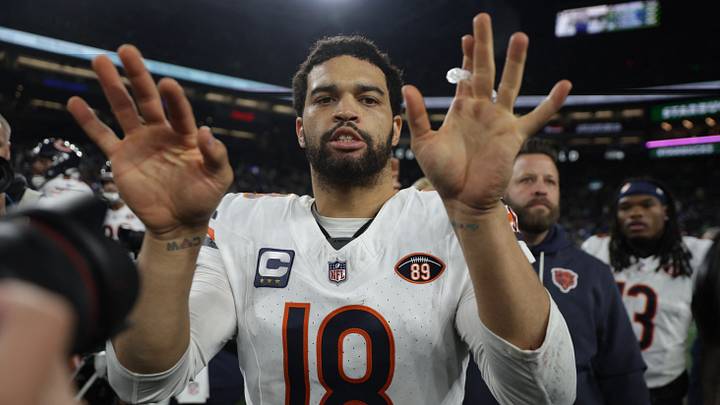
The Chicago Bears are 7-2, have one of the NFL's most talked-about young quarterbacks and appear to have found their long-term answer at head coach. Apparently, that's still not enough to convince everyone.
During Friday's episode of First Things First, former NFL head coach Eric Mangini questioned whether Chicago was taking its success a little too comfortably. His comments sparked a disagreement with the rest of the panel, including Nick Wright, who wasn't buying Mangini's argument.
The exchange highlighted something Bears fans have probably noticed all season. Chicago keeps winning, yet some national analysts still seem determined to find reasons why it won't last.
Eric Mangini questions whether the Bears can handle success
Mangini selected the Bears as his upset-alert team for Week 11, suggesting they might be looking past New Orleans toward upcoming games against Detroit and Jacksonville. He could not have been more wrong after the Bears ended up defeating the Saints 21-13.
His reasoning wasn't particularly flattering.
Mangini suggested Chicago's players and coaches could become comfortable with their record, spend less time preparing for an inferior opponent and begin concentrating on more difficult games.
He even questioned whether the Bears might already be doing additional preparation for Detroit.
That would be a serious criticism of Ben Johnson's coaching staff if there were evidence supporting it.
But Mangini wasn't reporting anything from inside Halas Hall. He was offering a theory about how a successful team might approach its schedule.
Johnson has spent his time in Chicago demanding accountability, even when the Bears win. He's publicly criticized aspects of his offense that haven't met expectations rather than pretending everything is fine.
Chicago took care of business and did not have to worry about a disappointing performance. It does make Mangini's suggestion that the Bears are getting comfortable harder to accept.
Nick Wright pushes back on the Bears criticism
Wright wasn't particularly impressed with Mangini's prediction.
He questioned the idea of doubting Caleb Williams and Johnson coming out of a bye week, while the panel's reaction made it clear that Mangini's selection wasn't universally popular.
The disagreement reflects a larger issue surrounding Chicago.
Williams threw four interceptions in his previous appearance, giving critics legitimate ammunition. He's still developing, and the Bears haven't eliminated the mistakes that can turn a winnable game into a frustrating afternoon.
But Chicago's improvement shouldn't be dismissed because its quarterback occasionally struggles.
The Bears have developed a productive running game, strengthened their defense and shown they can win without requiring Williams to deliver a spectacular performance every week.
Those are meaningful changes from the teams that spent years searching for answers at quarterback and head coach.
National skepticism isn't necessarily unfair. Chicago hasn't accomplished anything in the postseason under Johnson, and regular-season success doesn't automatically translate into a championship contender.
Still, there's a difference between questioning whether the Bears can win in January and suggesting they've already become complacent in November.
Despite Mangini's prediction not coming to fruition, he may be onto something about the Bears becoming complacent.
For now, Chicago has earned the right to be judged on what it's doing this season rather than what previous Bears teams failed to accomplish.
 Add us as a preferred source on Google