

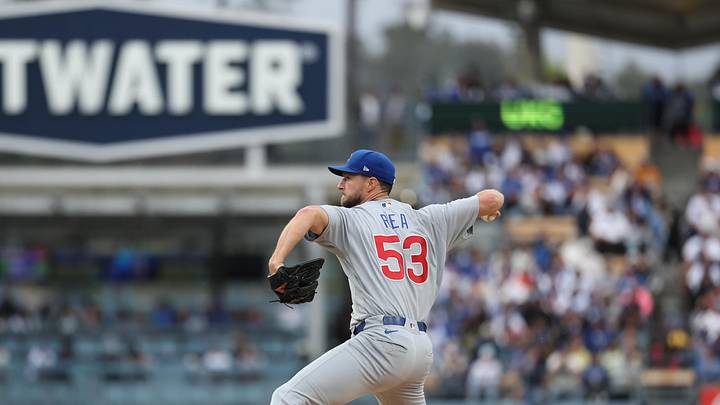
Colin Rea gave the Chicago Cubs exactly what they needed on Saturday, and it continues a trend that is quietly holding this pitching staff together. Rea gave up five hits in 5.1 innings pitched, and allowed only two earned runs. He wasn't excessively dominant, but he gave the Cubs a fighting chance to win the game, and he left the game with the win on his hands.
When the bullpen is stretched as thin as the Cubs are right now, it's imperative that the starters go as deep into the game as they can to alleviate the already present pressure. Rea's outing may not jump out on the stat sheet, but he managed the game well. and he didn't add unnecessary traffic on the basepath.
Rea and Taillon are stabilizing a thin rotation
It's a sentiment Rea was echoing from Jameson Taillon, who threw for seven innings on the 29th. Taillon gave up three hits and three earned runs, and threw six strikeouts. Taillon exited the game with the Cubs on top and didn't leave any runners for the bullpen to inherit. That's exactly the type of control that can keep the Cubs in the competitive running of the NL Central.
The Cubs aren't operating at full strength, and that's what makes outings like these even more important. It's been over a year since the rotation saw their ace, Justin Steele. The constant pressure on the starters has caused a thinner margin for error for everyone involved, and the patches that Craig Counsel and the rest of the coaching staff have placed over the holes can only be sustained for so long.
The key is to limit bullpen innings and to pitch effectively late into the game. That doesn't necessarily mean that the pitching needs to blow past them, or to overpower through rough force. But doing enough to keep the base path relatively clear, and keep the Cubs competitive. It's not a deal that's going to hold forever, but it should be enough to buy the Cubs some time.
It may not be a dominant stretch from the Cubs pitching staff, but it is effective. Rea and Taillon have shown that controlling the game and limiting damage can be enough to win right now. As long as that continues, the Cubs will remain in the fight.
 Add us as a preferred source on Google