

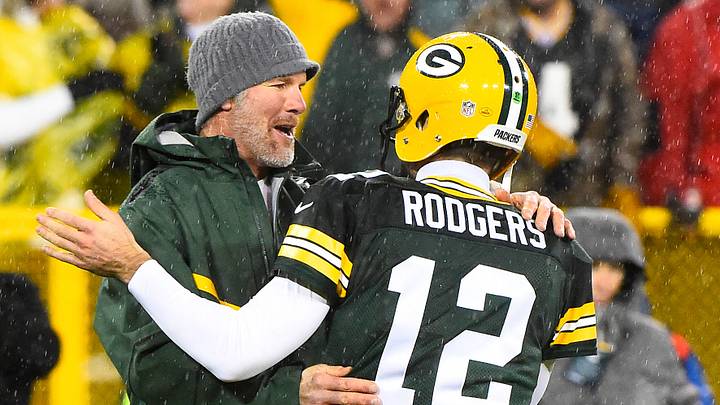
For almost 30 years, the Chicago Bears helped make Brett Favre and Aaron Rodgers look inevitable. Green Bay usually collected its win, often came back for another and carried that head start into January.
January was where the act tended to fall apart.
Chicago kept giving Green Bay a head start
Favre went 22-10 against the Bears as a member of the Packers. Rodgers finished 24-5 against Chicago, throwing 64 touchdowns and only 10 interceptions.
Add it together: 46-15.
Calling those games automatic wins would be unfair. Calling them close to automatic is just reading the results.
Every victory counted toward another division race, better playoff positioning or one more postseason appearance. Green Bay entered most seasons knowing Chicago would probably contribute something useful to the cause. The Bears obliged with lousy quarterbacks, unstable coaching staffs and some spectacularly poor timing.
They also gave Favre and Rodgers a perfect stage.
Favre could fling the ball around, survive an ugly decision and get praised for being fearless. Rodgers treated Bears defenses like a personal hobby. Watching either quarterback torment Chicago twice a year made it easy to believe the same dominance followed them into the playoffs.
It did not.
Brett Favre kept finding the wrong jersey
Favre threw 44 postseason touchdown passes. He also threw 30 interceptions in 24 playoff games.
That second number tends to disappear when his career is reduced to toughness, consecutive starts and grainy footage of him celebrating in the snow.
Six of those interceptions came against the Rams in January 2002. Three were returned for touchdowns. St. Louis defenders caught as many Favre passes that afternoon as some Packers receiving groups managed in an entire month.
Two years later, Green Bay faced Philadelphia in overtime. The Eagles had already survived fourth-and-26, a play that should have buried them. Favre responded by floating a pass downfield with no Packers receiver particularly close to it. Brian Dawkins made the easy interception, and Philadelphia soon kicked the winning field goal.
The next postseason brought another home game and four more interceptions, this time against Minnesota. Green Bay had beaten the Vikings twice during the regular season. Favre made sure there would not be a third.
His final throw with the Packers fit the collection perfectly.
Green Bay hosted the Giants in the 2007 NFC Championship Game. Favre threw across the field in overtime, Corey Webster jumped the route and New York kicked the winning field goal three plays later.
2⃣3⃣ days until Giants football with #23 Corey Webster's OT interception on Brett Favre in the NFC Championship! pic.twitter.com/wKJDcvnmgq
— Giants Nation Show (@GiantsNationPod) August 21, 2026
Then came the Minnesota sequel.
Favre joined the Vikings in 2009, played some of the best football of his career and reached another NFC Championship Game. Minnesota was tied with New Orleans and nearing field-goal range with 19 seconds left. Favre rolled right. He had open grass in front of him.
Running would have been boring.
Instead, he threw back across his body and directly into the arms of Tracy Porter. New Orleans won in overtime and went on to win the Super Bowl. Favre later provided a wonderfully concise review of his decision: “I choked.”
For once, there was nothing to add.
On this day in 2010:
— Barstool Gambling (@stoolgambling) January 24, 2025
The Saints beat the Vikings (+4) 31-28 in OT of the NFC Championship.
Brett Favre threw an interception on 3rd and 15 from the Saints 38-yard line with 13 seconds remaining.
pic.twitter.com/zY88IFjpyy
Aaron Rodgers received better excuses
Rodgers did not spray postseason interceptions around with Favre’s enthusiasm. Because he protected the ball so well, blame usually traveled elsewhere when Green Bay lost.
The defense failed. Special teams collapsed. The coach got conservative. Somebody ran the wrong route. Perhaps Mercury was feeling mischievous.
Rodgers still went 11-10 in playoff starts for the Packers. Green Bay lost four NFC Championship Games with him and reached one Super Bowl during his 15 seasons as the primary starter.
That championship run went through Chicago. The Packers defeated the Bears in the 2010 NFC Championship Game, won Super Bowl XLV and never returned.
Seattle offered one of Rodgers’ ugliest missed opportunities four years later. He threw two interceptions, Green Bay repeatedly settled for field goals and a 16-0 lead somehow became an overtime loss.
Tampa Bay was just as damaging. Tom Brady threw three interceptions during the second half of the 2020 NFC Championship Game, practically begging Green Bay to take control. The Packers turned those three extra possessions into six points. Rodgers also threw an interception that helped Tampa Bay score before halftime.
One year later, the NFC’s top seed hosted San Francisco. Green Bay scored a touchdown on its opening possession and managed three points the rest of the night. Rodgers had the ball with the score tied late in the fourth quarter. The drive gained seven yards.
San Francisco won 13-10.
Rodgers’ last pass as a Packer came the following season against Detroit. Green Bay needed a win to reach the playoffs. The pass was intercepted.
Heartbreaking: Aaron Rodgers' last pass as a Packer. pic.twitter.com/Ee4OYwdgCi
— Dov Kleiman (@NFL_DovKleiman) July 2, 2025
Even his 2025 postseason appearance with Pittsburgh followed the old script. Rodgers lost a fumble that Houston returned for a touchdown, then threw a pick-six during a 30-6 loss.
The Bears made the legend larger
Green Bay enjoyed Favre and Rodgers back-to-back, collecting seven MVP awards and nearly three decades of quarterback security. Chicago spent that same period wandering through the desert with a rotating cast of unfortunate volunteers.
The final championship count was 2-0.
Packers fans can laugh at that comparison. They should. Chicago would gladly trade its misery for Green Bay’s version of disappointment.
Still, two Super Bowl wins remain a thin return from two legendary quarterbacks and all those trips to the playoffs. Favre repeatedly threw seasons away. Rodgers was cleaner, calmer and usually surrounded by better excuses, but he kept leaving January before the Packers expected.
The Bears helped punch Green Bay’s playoff ticket year after year. Once Favre and Rodgers arrived, they became remarkably good at handing it back.
| More Bears on DaWindyCity |
 Add us as a preferred source on Google